
 +91 9594449393
 +1 4847906355
 +63 9208320598
 +44 1519470017
 +84 908370948
 +7 9639173485
 +62 81808037776
 +90 5441016383
 +66 993367171
 +254 725235855
 +256 707194495
 +46 700548490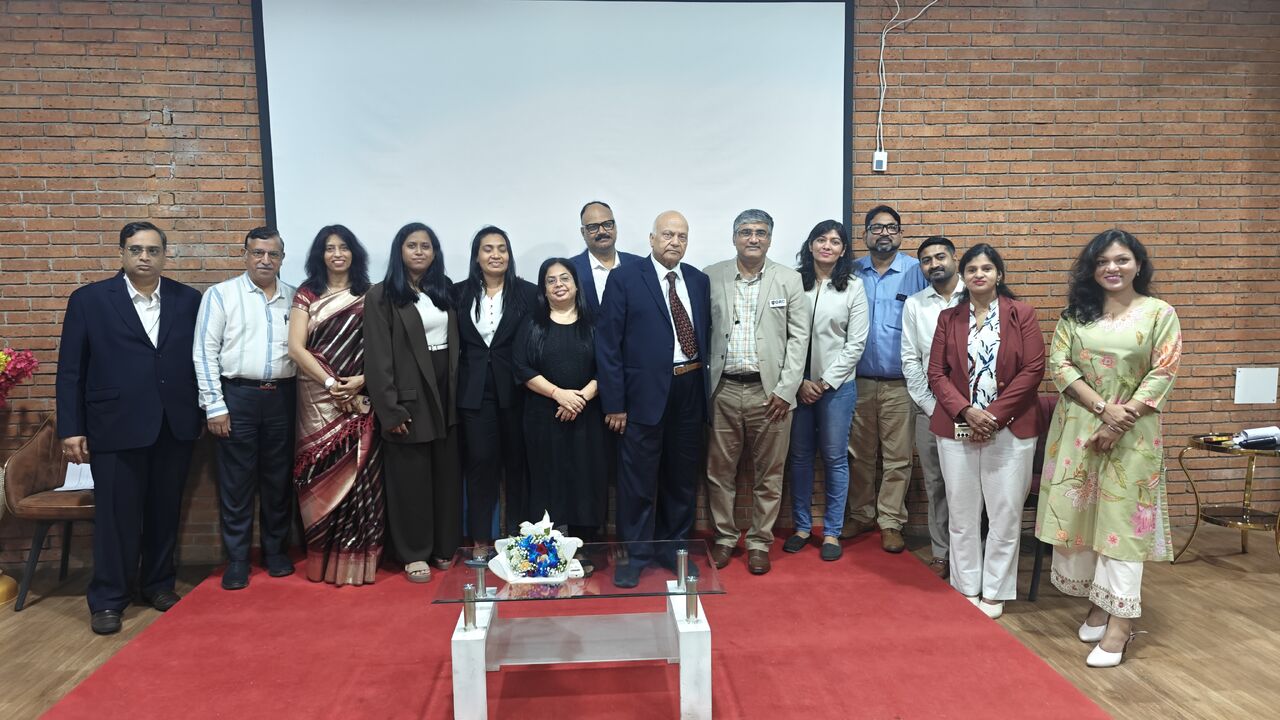
Navi Mumbai, India - 18 July
2026: As Artificial Intelligence becomes increasingly embedded across
banking and financial services, the conversation is shifting from what AI can
do to how organizations can govern its risks responsibly.
Against this regulatory backdrop,
QRC Assurance And Solutions, in collaboration with the Cyber Security
Association of India (CSAI), hosted the CSAI Maharashtra Chapter Industry
Roundtable, bringing together leaders and professionals to discuss the Reserve
Bank of India’s Draft Guidance on Regulatory Principles for Model Risk
Management, 2026. The occasion also marked the official inauguration of
the CSAI Maharashtra Chapter, establishing a new platform for continued
industry collaboration around cybersecurity, responsible AI and digital trust.
RBI’s Draft Puts Model Risk in
the Governance Spotlight
The timing of the roundtable was
significant. Released on 24 June 2026, RBI’s draft proposes a comprehensive
governance and risk-management framework covering models used by regulated
entities, including Artificial Intelligence and Machine Learning models.
The proposals extend across the
model lifecycle - from development and validation through deployment,
monitoring, change management and eventual decommissioning. For AI and ML
specifically, the draft introduces considerations around areas such as explainability,
bias and fairness, hallucination risks, human oversight, cybersecurity
safeguards, monitoring and customer transparency.
This changes the nature of the AI
governance conversation for financial institutions.
Moving the Discussion from
Regulation to Implementation
The CSAI Maharashtra Chapter
Industry Roundtable focused precisely on this transition. Participants examined
the RBI draft, discussed governance and implementation considerations,
exchanged industry experiences and challenges, and explored practical
recommendations for strengthening AI governance across financial services.
The discussions highlighted a
fundamental question facing regulated organizations: how can innovation
continue while accountability remains clear throughout the AI and model
lifecycle?
That requires organizations to
consider more than model performance.
Leadership Supporting the
Dialogue
The event reflected the
collaborative efforts of QRC and CSAI in bringing together perspectives from
cybersecurity, governance and industry.
QRC acknowledged the leadership
and contribution of Prof. NK Goyal and Lt. General (Dr.) Rajesh Pant,
Chairman of CSAI and former National Cyber Security Coordinator, Government of
India.
The newly inaugurated Maharashtra
Chapter brings together a leadership group spanning cybersecurity, financial
services, governance and emerging technology. The Chapter leadership includes Adv.
Pinky Bhansali, Head – Maharashtra Chapter Betty Varghese, Technology Risk
& Cyber Governance Professional Sanjeev Khanna, former AGM-CISO, State
Bank of India Vamsi Krishna Maramganti, CEO, QRC Assurance And Solutions and
Dr. Shravani Shahapure, Quantum Safe Cyber Security Expert.
Their involvement establishes a
foundation for continued engagement with the cybersecurity and technology
community across Maharashtra.
Inaugurating the CSAI
Maharashtra Chapter
Alongside the regulatory
discussion, the inauguration of the CSAI Maharashtra Chapter marked an
important milestone for the regional cybersecurity ecosystem.
CSAI brings together
professionals and stakeholders working across cybersecurity, technology, policy
and digital governance. The Maharashtra Chapter creates an additional platform
for industry leaders to exchange knowledge and contribute to discussions around
evolving cybersecurity and emerging-technology risks.
For QRC, collaborating on the
roundtable and supporting the Chapter’s inauguration aligns with a broader
commitment to strengthening knowledge exchange around cybersecurity,
governance, AI risk and responsible technology adoption. The initiative
also creates opportunities for future dialogue as organizations respond to a
regulatory landscape that is increasingly addressing AI alongside traditional
cybersecurity and technology risks.
What the RBI Draft Means for
Financial Institutions
The direction emerging from RBI’s
proposed guidance is clear: AI adoption and model governance will
increasingly need to evolve together.
For banks, NBFCs and other
regulated financial entities, readiness may therefore require a broader
examination of existing governance structures.
Organizations may need to
understand their complete model landscape, establish clear ownership, classify
models according to risk, strengthen independent validation, monitor models
throughout their lifecycle and establish appropriate governance over third-party
AI technologies.
For Boards and senior management,
the challenge is equally important.
Responsible AI requires
organizations to demonstrate not simply that controls exist, but that
accountability, transparency and oversight remain effective as models and
technologies evolve. The roundtable provided a timely opportunity for the
industry to begin examining these implications collectively.
Continuing the Responsible AI
Conversation
The CSAI Maharashtra Chapter
Industry Roundtable demonstrated the value of bringing regulators’
expectations, industry experience, cybersecurity expertise and governance
perspectives into the same conversation.
As AI adoption accelerates,
collaboration of this kind will become increasingly important in translating
emerging regulatory principles into sustainable organizational practices.
QRC Assurance And Solutions and
the Cyber Security Association of India look forward to continuing these
conversations through the Maharashtra Chapter and supporting greater awareness
around responsible AI, cybersecurity, model risk management and digital
trust.
Follow QRC Assurance And
Solutions and the CSAI Maharashtra Chapter for further industry discussions on
AI governance, cybersecurity, model risk and responsible technology adoption.